Avoid These Common Commercial Landscape Maintenance Mistakes in Texas
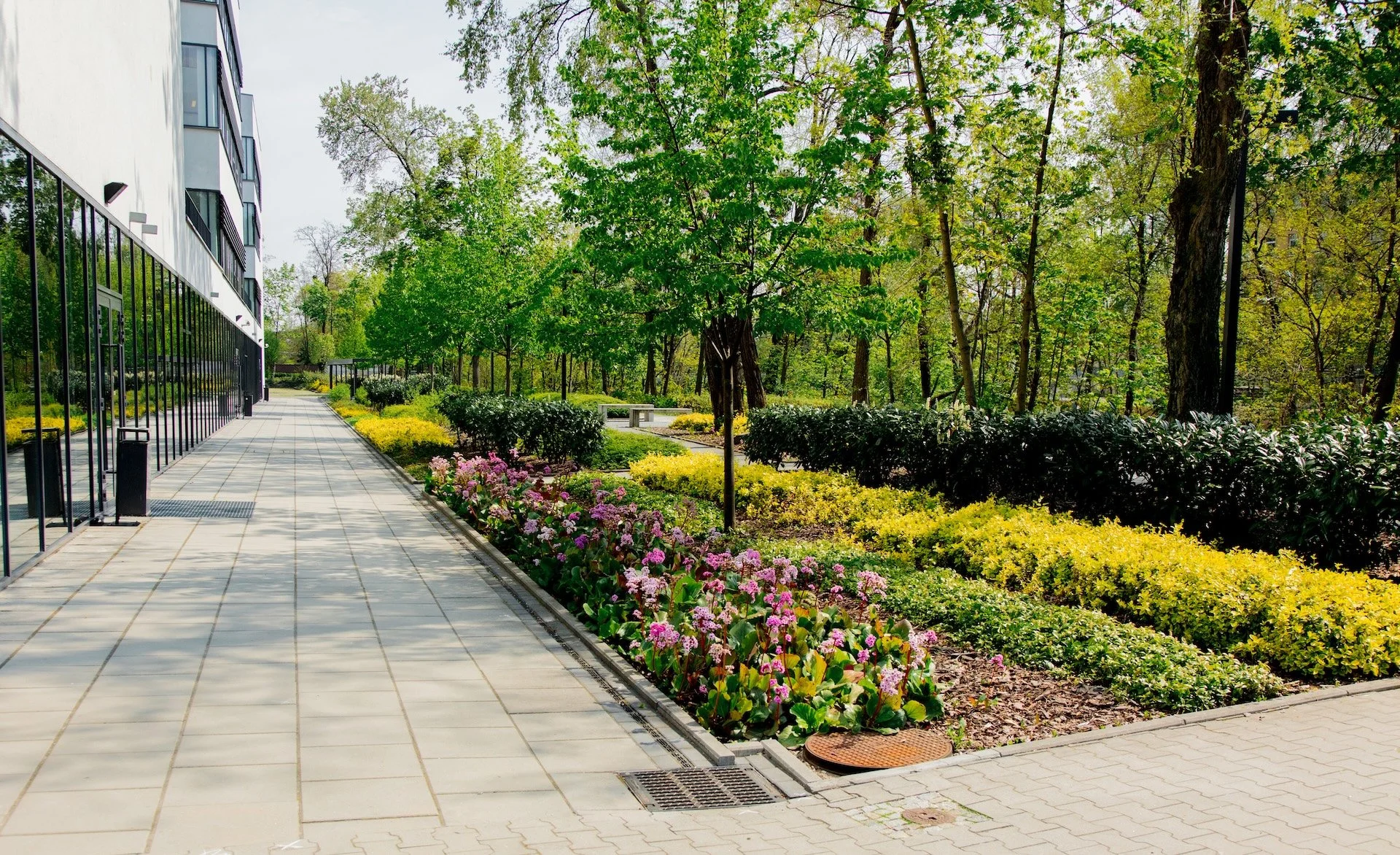
Commercial landscape maintenance plays a critical role in how properties function and look throughout the year. In Houston, TX, commercial landscape maintenance requires a strategy built around heat, humidity, and sudden storms. We approach commercial landscape maintenance with a clear plan that supports healthy turf, resilient plantings, and well-performing outdoor spaces for business owners across our area.
Ignoring Climate Demands in Commercial Landscape Maintenance
One of the most common commercial landscape maintenance mistakes involves ignoring the realities of our climate. Our area sits in USDA Hardiness Zone 9a, where extended heat and heavy rainfall shape every decision we make.
When crews mow turf too short during peak summer or fertilize at the wrong time, lawns decline quickly. We adjust mowing heights as temperatures rise and monitor turf stress closely. We also time nutrient applications around growth cycles, not calendar convenience.
Plantings require the same attention. Broadleaf evergreens, ornamental grasses, and hardy perennials perform well here when we manage them correctly. If teams prune at the wrong time or install species unsuited for prolonged humidity, decline follows. We install regionally appropriate plantings and schedule pruning based on plant type and season.
Overlooking Drainage and Irrigation Oversight
Drainage problems frequently undermine commercial landscape maintenance in our area. Sudden downpours overwhelm poorly graded sites, leading to standing water along walkways and near building foundations. Over time, this affects turf performance and structural elements.
We inspect grading, channel drains, and permeable pavers regularly. If we identify erosion near natural stone walkways or seating areas, we correct the issue before it expands. Commercial landscape maintenance must include routine drainage evaluations, not just surface care.
Irrigation oversight also matters. Overwatering in humid conditions encourages fungal disease. Underwatering during extreme heat leads to thinning turf and weed intrusion. We adjust irrigation schedules seasonally, check for broken heads, and fine-tune coverage to support consistent growth.
Skipping Seasonal Rotations in Planting Beds
Another frequent commercial landscape maintenance mistake involves neglecting seasonal planting rotations. In our area, cool-season blooms struggle once summer temperatures intensify. When properties rely on the same annuals year-round, planting beds lose vibrancy.
We schedule seasonal installation of annual blooms that tolerate temperature swings. In spring, we integrate heat-tolerant perennials with structured evergreen plantings. As temperatures shift in fall, we transition to varieties suited for cooler nights.
Timing remains critical. If crews delay removing declining blooms, gaps appear in planting beds. Commercial landscape maintenance requires proactive scheduling so properties maintain a polished appearance throughout the year.
Neglecting Structural Elements and Outdoor Lighting
Commercial landscape maintenance extends beyond turf and plantings. Many business properties feature natural stone walkways, paver patios, seating walls, and decorative concrete plazas. These hard surface features demand consistent oversight.
When teams overlook joint sand loss between pavers or shifting surfaces along walkways, minor issues turn into larger repairs. We inspect structural elements during each visit and address small concerns before they escalate.
Outdoor lighting also plays a key role. Burned-out fixtures and misaligned beams reduce visibility around entrances and gathering areas. We test systems, replace bulbs, and adjust fixtures to highlight plantings and architectural features without glare.
Applying a Residential Approach to Commercial Sites
Commercial landscape maintenance differs from residential service. Business properties experience constant foot traffic, delivery vehicles, and daily public use. Turf compacts faster, and entry plantings endure heavier wear.
We design our commercial landscape maintenance programs around how the site functions. We reinforce high-traffic zones with durable turf varieties and structured plantings. We monitor entrances closely because they set expectations for tenants and visitors.
When crews apply a residential mindset to commercial landscape maintenance, they overlook these performance demands. We focus on consistency, durability, and site function so every element supports the daily operations of the property.